Posted

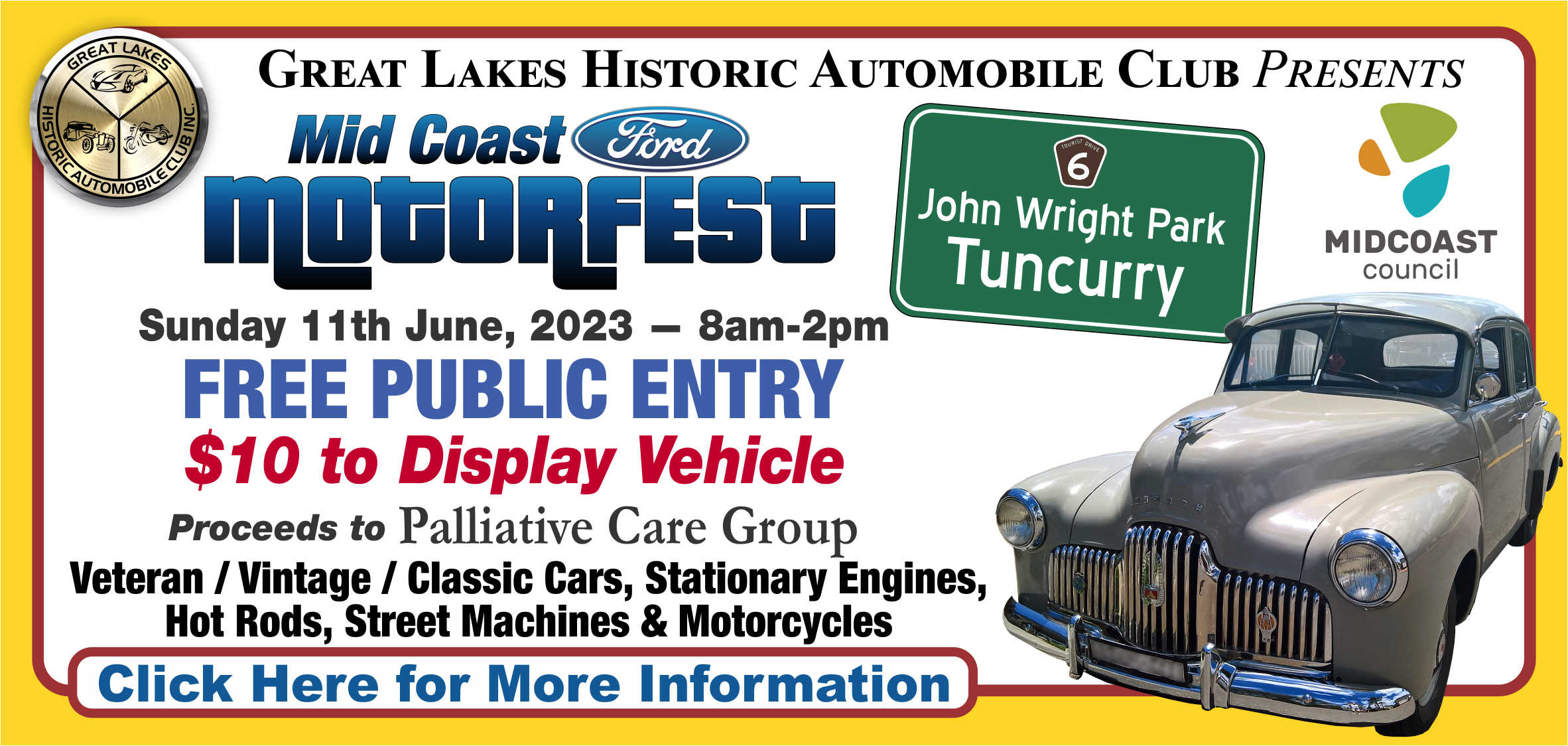
Just a friendly reminder to all that the monthly meeting is tonight, 7pm in the main auditorium at Tuncurry Beach Bowling Club.
We look forward to seeing you there!

Author


Posted

There was quite a field of Duesenbergs at the La Jolla Concours d’Elegance last weekend, spread out between two classes. Consider that a good number of these classic American cars live in the Southern California area, and that their owners are happy to bring them out to shows like this, and you see that the competition among them was strong this year.


The crowd cheered when the announcement was made, so, apparently, everyone agreed this was The Car.

And yet it was fairly clear to almost all present which car should win: the William Lyon family’s 1931 Duesenberg Model J Weymann “TaperTail” Speedster.

“It’s pretty stunning in person,” said the concours’ co-emcee and local television newsman Dave Kunz. “The whole place erupted in applause when it rolled up as we announced it as Best In Show.”

“It’s a lovely car,” said author, historian, and museum curator Ken Gross, when he was forwarded a photo.

The Lyon Family Duesenberg Speedster is one of two speedster designs by Gordon Buehrig , done for the Weymann coachbuilding firm of Indianapolis.

“Hired by Duesenberg in 1929, Buehrig designed the signature ‘J’ model Duesenbergs and spearheaded a new era of autotmotive design, of dramatic and sweeping lines—replacing the prior, Edwardian/gothic ‘carriage’ ornate ‘box’ genre, and the 1931 Speedster is arguably the most stunning and pioneering example of this new aesthetic,” said industrial designer and automotive photographer Royce Rumsey, whose photos you see here. “Based on the shorter of two Duesenberg chassis (in this case, chassis #2450) Buerhig jettisoned both the running boards and step plates and shaped a teardrop form flowing from the cowl that he dubbed the ‘taper tail’ (assisting in the taper was a single-passenger rumble seat instead of the usual two-seat rear rumble). The dramatic addition of the vermillion sweep panel completed the jaunty and powerful/sporting aesthetics that became a signature tone for the Duesenberg marque.”

It was quite the performance car for 1931.

“Duesenbergs were known as ‘hot rods’ for their amazing performance,” said co-emcee of the event Ed Justice Jr., president and CEO of Justice Brothers. “The Model J Weymann Taper Tail has the look to go with that: no running boards, no door handles, no hinges, those are all features that would later define a ‘hot rod.’ Add the taper tail, and this is a standout in the history of Duesenberg. Considering that the display of Duesenbergs at the La Jolla Concours was one of the biggest in quite a while, winning the Best In Show speaks volumes.”

Author


Posted

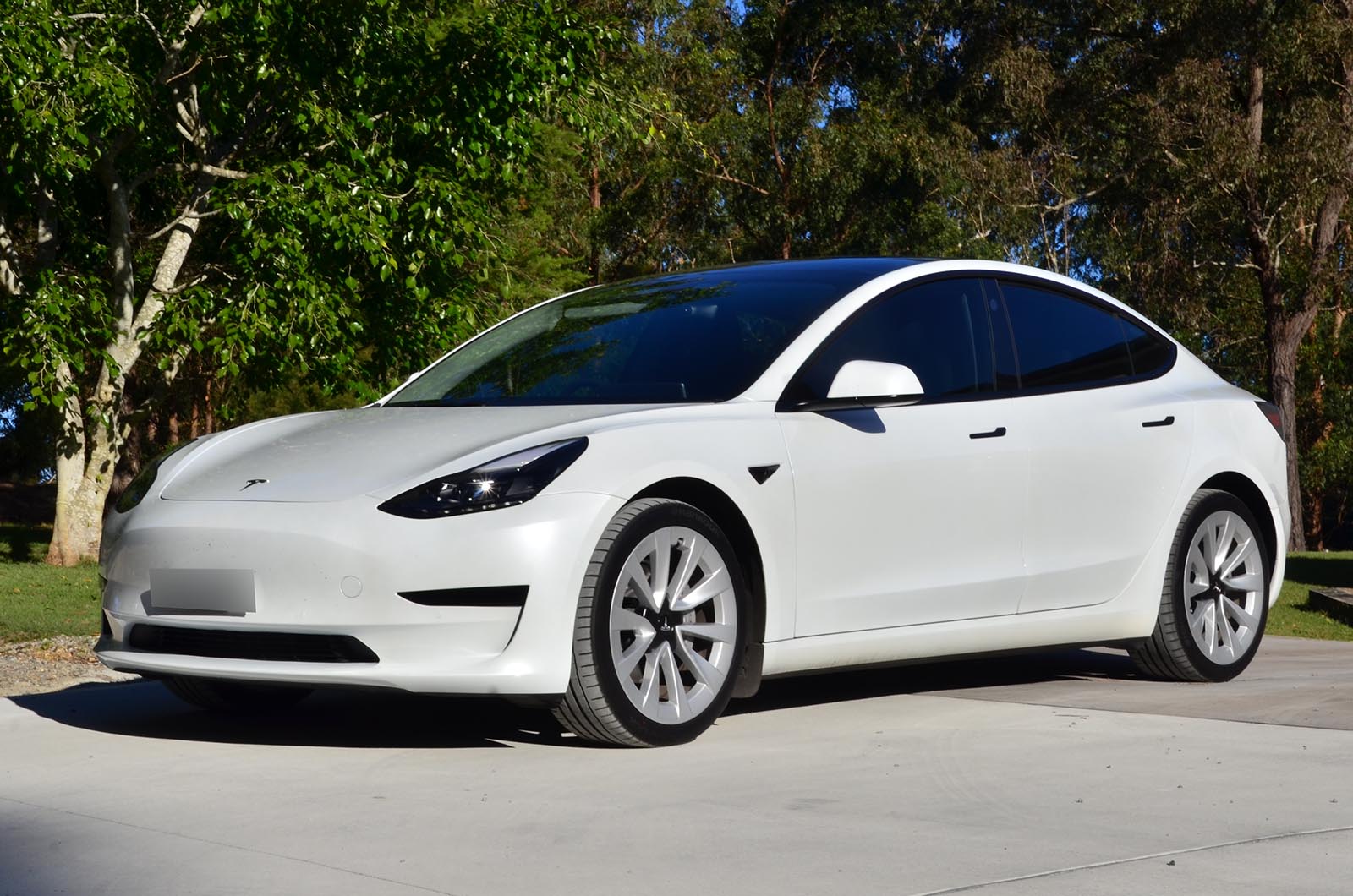
The Norwegian shipping company, Havila Kystruten, has banned electric, hybrid, and hydrogen cars from its ferries. After a risk analysis, it was concluded that the risk to the safety of the shipping fleet was too significant. If a vehicle catches fire, the fire can no longer be extinguished.

The risks for ships from the transport of Electric cars (EV) have been discussed since the “Felicity Ace” sank off the Azores, Portugal, last February. E-vehicles on board had caught fire. The fire could not be extinguished. Finally, the colossal ship sank with thousands of electric cars, including Porsche and Bentley “green” vehicles.

Capt. Rahul Khanna, global head of marine consulting at Allianz (AGCS), a marine insurance specialist, explains that the problem with EVs is that lithium-ion batteries in the cars can actually propagate the fire, igniting more vigorously as compared to conventional cars. A single vehicle fire could prove catastrophic.

E-cars are a “danger” for ship passengers

According to a report by the TradeWinds shipping news service, Havila’s Chief executive Bent Martini said the risk analysis showed that the fire in an electric car required a particularly complex rescue operation. The crew on board could not afford this. Passengers would also be at risk. This is different for vehicles with combustion engines. A possible fire is usually easy to fight by the ship’s crew.

After the sinking of the “Felicity Ace,” Greenpeace also warned against e-cars on ships: “In general, electronic components and especially electric vehicles pose a risk for every transport.”

Fire fear: Bent Martini bans electric cars from Havila ropaxes

Norway’s Havila Kystruten will no longer carry electric or hybrid cars on its ferries because of fire fears.

Chief executive Bent Martini said a risk analysis by Proactima had concluded that only blazes starting in conventional vehicles can be dealt with by crews.

Calling the ban a “pure safety assessment”, he added: “A possible fire in electric, hybrid or hydrogen cars will require external rescue efforts and can endanger people on board and the ships.

“We take security seriously, and it is of course a risk we are under no circumstances willing to take.”

Havila Kystruten said it is working to find solutions that can minimise the risk of transporting this type of vehicle in the future.

“We are fully aware that there is a certain expectation, especially from the coastal community, that ships along the coastal route must assist with the transport of private motor vehicles between ports,” Martini said.

“At the same time, it is not a requirement in the agreement with the Ministry of Transport that ships on the coastal route must transport private cars.”

Havila Kystruten’s ships have the largest battery packs installed on any passenger vessels, but the Saevik family-controlled owner said these do not pose a safety risk.

“Our ships are built with their own battery packs, and they are installed in accordance with current requirements for fire safety on ships. This means that our batteries are divided into isolated and fireproof rooms, with specific fire protection systems,” the CEO said.

Electric car fires have been a problem for vehicle carriers.

Owners of these specialised ships are flush with cash and need to spend more on preventing these incidents, insurers have warned owners.

Captain Martti Simojoki of marine insurer Alandia and Geir Jorgensen, Skuld’s global head of loss prevention, said shipping companies should also be spending more on training and equipment.

Author


Posted

Hi everybody
The very popular Cundletown Motor Show & Community Markets is happening again at Cundletown Square Park (opposite the old Uniting Church in Cundletown.
It’s happening on 6 August 2023 from around 8am.
Over a dozen prizes will be on offer. Entry is FREE
Cars, Trucks, Buses and Motor Cycles are all welcome.
Look at the great vehicles on show then wander over to the markets for a bargain.
Hope to see you there.

Further information on brochure: Click here for more info.

Chris Goodsell
Organiser
Enquiries: 0414 945 393

Author


Posted

Well in the beginning, in a previous life I was a bank manager with the State Bank of NSW. I was transferred in late 1991 from manager Coffs Harbour to manage the Bank’s then Tuncurry Branch (yes there was more than one bank in Tuncurry at that time, four actually). In Coffs I had been vice president of the Coffs Harbour Veteran & Vintage Car Club, and had my 1961 Bedford coach and 1952 AEC Regal bus on their plates. I and my family enjoyed many wonderful activities with the Coffs Club. They were a great group of people.
On my arrival in the Great Lakes I found no classic car club. I got together with local car identities Allen Curtis and Col McDonald and suggested to them that there was a need for a Club locally. My expertise was the legal, constitutional and formation aspects of forming a club while Allen and Col had the local knowledge of those who might make up our formation membership, not to mention between them owning some thirty or forty cars.
Our first meeting was held at the Curtis Collection in December 1991, our first run to One Mile Beach in January in 1992. Perusing our first membership list, foundation members still in the club are John Amato, Dick Cawley, John Daniel, Peter Darbin, and myself.
The foundation membership contained twenty seven names Over the fifteen years since inception the Club has had six presidents, Col McDonald, Ron Taaffe, Bob Burns, Ray Sonter (x2), Peter Cole and our current incumbent Ron Pulling. There has been four treasurers – Garry Cater, Graham Smith, Brian Rees and Ross Humphries, one Registrar and Assistant Registrar John Daniel and John Amato, and one secretary, myself.
A club magazine was commenced just after the club’s inception, the first magazine to carry the name Exhaust Notes published in June 1992. Bruce Molin thought of the name and was the foundation editor.
I took over in October 1992 and have filled the roll ever since. The magazine has come a long way, being initially put together with a typewriter and produced at Old Bar School. In November 1994 Eric from EDN Print & Mail in Leura took over printing the magazine, with an upgrade in quality, In 2005 Bookworks of Lakemba took over. I started preparing the magazine on a computer a few years later. The magazine is now done electronically.
The Club was initially formed with a charter to be a family based club where the cars are not our prime concern, people are. The cars are a common interest. Our club I am happy to say, I feel has met that first up aim.The committee we have had over the years from the president down have done a fabulous job, and I as founder would like to thank them for all the hard work. But at the end of the day a club is as only as good as its members, and this is where we are big winners. Our club is one of the very best around. We have a good reputation and the number of new folk joining us month after month is evidence of this.

Written by Chris Goodsell
Club Founder
Great Lakes Historic Automobile Club Inc.

Author