Posted

🗣️📢 Announcement from Tea Gardens Hawks Nest Motor Club🗣️📢

We are watching the weather and are still confident that Saturday will be going ahead as planned for Motorfest. We will update this page daily.
We can’t predict what impact the Cyclone may have and will only cancel if the weather turns sour. So far we have had a very occasional shower amongst sunny and cloudy periods and believe this will not affect our event.

Updates are being posted on the TGHNMC Facebook Page and Website. 🌀🌧️ Please heed cyclone weather warnings and stay safe.

Tea Gardens Hawks Nest Motor Club Inc. was established in 2002 for the purpose of providing a Club for local Motoring Enthusiasts to enjoy informative discussions on interesting motoring related topics while also supporting local service organisations.

Author


Posted

Just a friendly reminder that the next General Meeting of Great Lakes Historic Automobile Club Inc. is:
📅 Wednesday, 5th March 2025, 🕖 7pm,
📍 Tuncurry Beach Bowling Club. 21 Parkes St, Tuncurry.

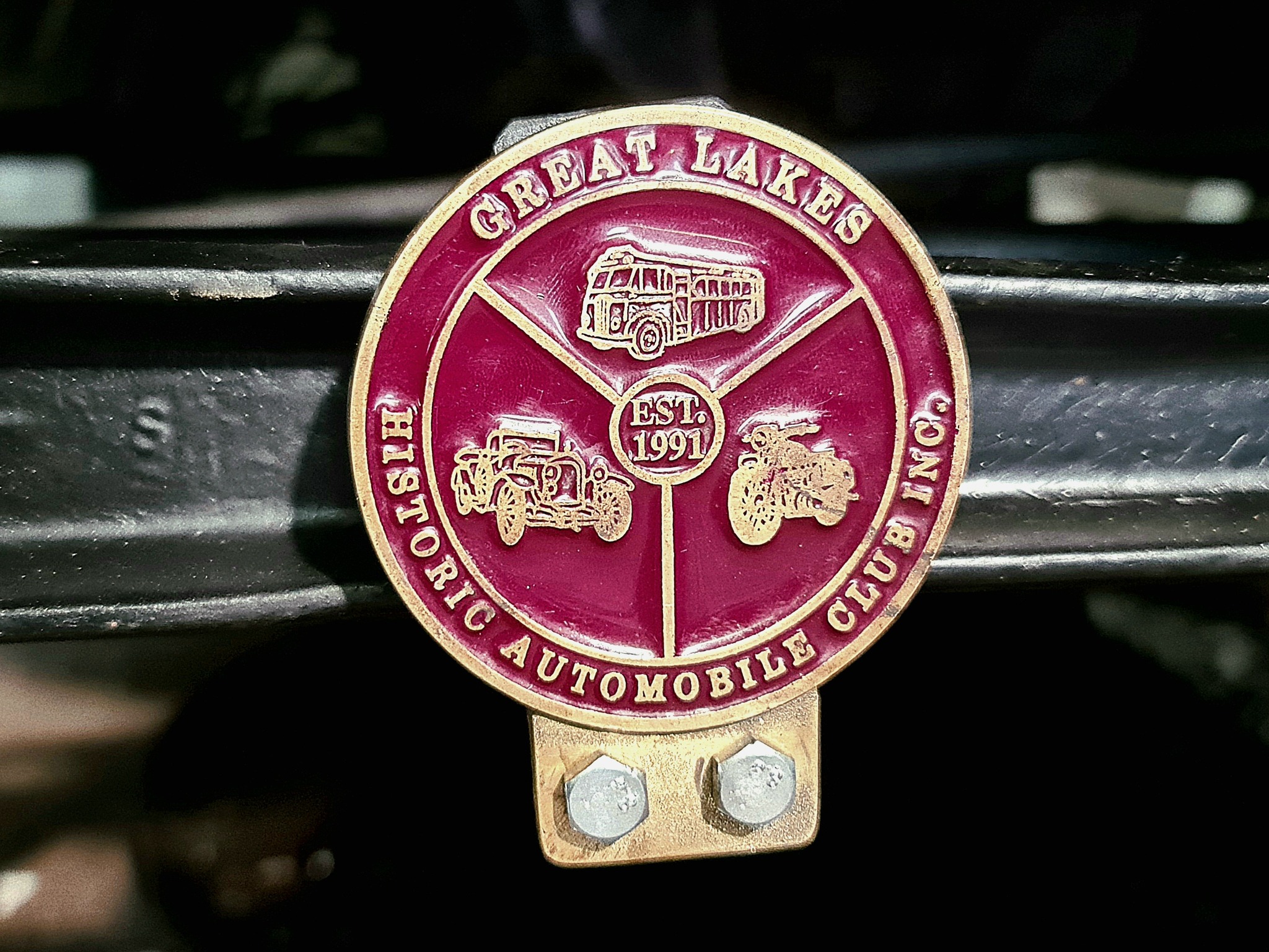
Founded in 1991, Great Lakes Historic Automobile Club offers technical support and a variety of social activities for people interested in classic, vintage and veteran vehicles.

Great Lakes Historic Automobile Club always welcomes new members. We welcome applications from anyone with an interest in the preservation, appreciation and driving of classic, vintage and veteran vehicles. H Plates / J Plates or Concessional Registration is available through the Club for eligible members’ vehicles.

Not a member yet? 👥 Click here to find out about joining our club!

Author


Posted

Just a friendly reminder that the next General Meeting of Great Lakes Historic Automobile Club Inc. is on 📅 Wednesday, 5th February 2025, in the main auditorium at Tuncurry Beach Bowling Club. 21 Parkes St, Tuncurry.

Founded in 1991, Great Lakes Historic Automobile Club offers technical support and a variety of social activities for people interested in classic, vintage and veteran vehicles.

Great Lakes Historic Automobile Club always welcomes new members. We welcome applications from anyone with an interest in the preservation, appreciation and driving of classic, vintage and veteran vehicles. H Plates / J Plates or Concessional Registration is available through the Club for eligible members’ vehicles.

Not a member yet? 👥 Click here to find out about joining our club!

Author


Posted

Come and join us for our annual Motorfest where there is the opportunity for you to exhibit your pride and joy to over 2000 visitors. We have plenty of food options including the RFS BBQ, Hawks Nest Football club canteen, French Crepes, Bush Turkey Coffee and Mema’s Bakery.

Entertainment for the kids includes: Face Painting, demonstrations and competitions.

Entry Categories are: Best Holden Classic, Best Australian Ford Classic, Best British Classic, Best American Classic, Best Japanese, Best Vintage/Antique, Best Modern, Best Australian Chrysler, Best Motorcycle, Best Group Display, Best Hot-Rod, Best Australian, Best European and Best Race Entry.

Saturday 8 March 2025, 8am-2pm
Myall Park, 63 Yamba St, Hawks Nest, NSW, 2324

Click Here to download the entry form

Author


Posted

1979:

After two years in the RA23 GT, Williamson returned with a new car for the 1979 Bathurst 1000, in which he had already won the Under 3.0 Class and finished a stunning fourth overall in the Australian Touring Car Championship (ATCC) behind three A9X Torana V8s. It was the larger, heavier second generation RA40 twin-cam GT coupe, which Williamson’s team built locally using a fresh body shell and well-developed engine and drivetrain components. Today he describes it as “a pretty ordinary car, with carburettors and a wet sump.” Williamson’s pioneering efforts with the Celica during the previous two years had not gone unnoticed by other competitors. As a result, two more Celicas joined Williamson and Quinn in the 1601-2000cc Class C ranks for Bathurst that year, with one (Williamson’s RA23 GT from 1977-78) driven by NSW chicken farmer Graham ‘Chickadee’ Bailey and Doug Clark with another entered by Wally Scott and Peter Walton. Williamson’s new Celica had more than its fair share of publicity in the days leading up to the race as it was to be the first car equipped with Channel Seven’s innovative ‘Racecam’ in-car camera, which for the first time would beam live images from the cockpit to millions of TV viewers watching at home.

The Racecam technology, which used a microwave link to transmit in-car vision, sound and driver chat via a chopper hovering high above the circuit, was an Australian invention and a world-first that would soon have TV broadcasters around the globe wanting a piece of the action.
The first Racecam unit was a goliath by today’s standards, featuring a pan-and-tilt camera head that could be adjusted via remote control from the pits. When installed in Williamson’s Celica, the whole kit resulted in a 27 kg weight penalty (from 1980 he was allowed to remove the car’s front passenger seat to compensate, as it weighed about the same).
The Racecam’s extra bulk certainly didn’t seem to be too much of a burden in the race, with Williamson and Quinn claiming their first victory in Class C. Not only that, they finished ninth outright and the first non-V8 car to cross the line behind eight A9X Toranas.
It was an outstanding result for the Celica, eclipsed only by the history-making success of its Racecam unit which triggered a global revolution in TV coverage of motor sport. “Willo” had provided not only stunning images and sounds but also some colourful commentary from the driver’s seat. A star was born!

WILLIAMSON: “Two blokes, John Porter and Peter Larsson, approached us at Amaroo Park when we were standing around at a barbeque after a race meeting there. They said they had this idea for an in-car camera but Brocky and the rest didn’t want anything to do with them. Anyway, I listened to what they had to say and it took me about 40 seconds to make a decision and we took it on. They did say it would require a fair commitment from us and that they’d need a fair bit of our time to help develop it and make it work, because it was just an idea at that stage.”
“Eventually Channel Seven agreed to fund its development and I remember going out to Oran Park every other week driving around and around with helicopters flying overhead as they experimented with different links and cameras and all that. It took a fair amount of time to work it all out.”
“It wasn’t perfect on the day of the race (at Bathurst). It rained a bit and when the trees got water in them it messed with the link, so when that happened they would yell out to me on the radio to switch this and turn that to cope with the problem and it worked.” Porter and Larsson would later move to the US where they established Broadcast Sports Technology (BST) and covered all major American motor sports with their innovative in-car camera system.

Author